 Holy Trinity Church
-
Breaking News
1. Welcome to our newest staff member
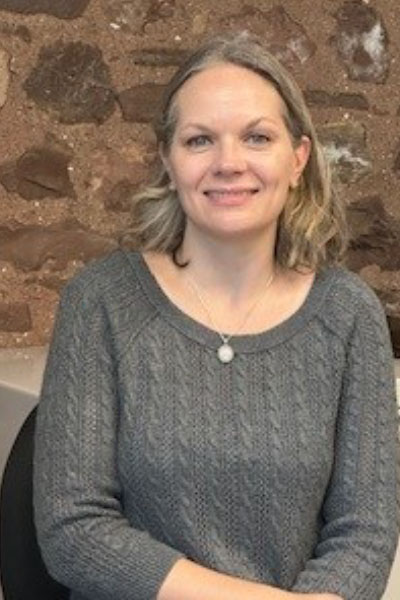
I am pleased to introduce Mrs. Janice Wilbert, the newest member of our parish staff. Mrs. Wilbert is serving as our Administrative Assistant, and you will see her in the parish office. I would like to share a few words that she has written to introduce herself to our parish family. “My name is Janice Wilbert. My husband and I live on a second-generation apple farm in the area with our three children. My husband grew up as a Holy Trinity parishioner and now we are blessed to be raising our children here in the parish. I am very grateful to be working within this wonderful faith community.”
2. October: The Holy Rosary, Respect for Life, and World Mission Sunday
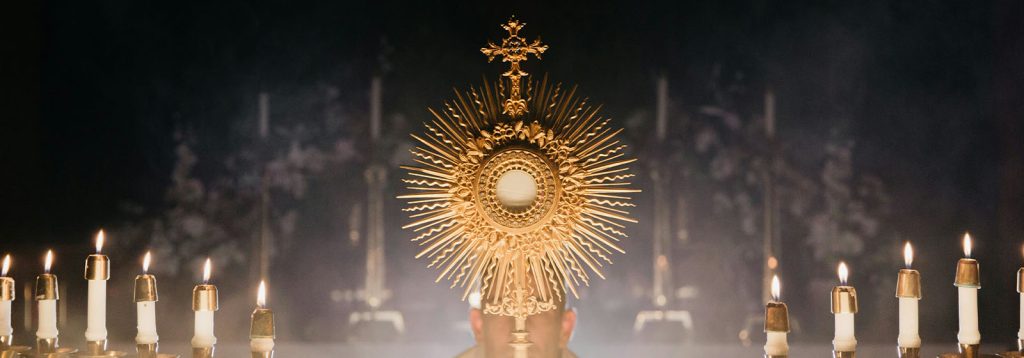
The Catholic Church dedicates the month of October in a special way to the Holy Rosary and to the cause of Respect for Life. Therefore, our parish will offer Adoration of the Blessed Sacrament from October 19 through October 23, beginning at 9:00 a.m., after the 8:30 a.m. Mass, and continuing until 6:00 p.m. We will conclude our time of Adoration with Benediction. I invite you to come and spend time in prayer before the Blessed Sacrament, bringing our needs and intentions to the Lord, especially praying for the protection of all unborn children. If you are unable to attend Adoration in person, I encourage you to pray the Holy Rosary with this same intention. In addition to these special intentions for October, on October 18, the Church will celebrate World Mission Sunday. This is an opportunity for Catholics throughout the world to pray for and support the Church’s missionary work. Let us also remember the Church’s worldwide mission in our prayers and ask the Lord to strengthen all those who proclaim the Gospel around the world.
3. Children’s Mass – October 18
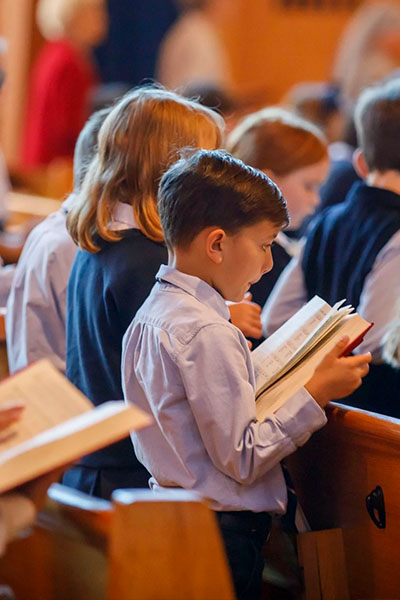
On October 18, we will celebrate our first Children’s Mass of the new school year at our 10:30 a.m. Mass. We have been celebrating this special Mass for our children for some time, but I would like to make it even more special for the Lord’s little ones. I ask parents to have their children come to the center of the church at the beginning of Mass. I want our children to be close to the altar so that they can see and experience more closely the beautiful mystery of the Eucharist as the bread and wine become the Body and Blood of our Lord Jesus Christ. At the Sign of Peace, the children will return to their families so that they can remain with you for Holy Communion. I hope that all parents will participate in this special Eucharistic celebration by encouraging their children to come forward and by experiencing together the wonderful gift of Holy Mass.
May this month of October be a time of many blessings for our parish family as we grow closer to Our Lord through prayer, the Eucharist, the Holy Rosary, and our service to others.
Remember, The Parish that we dream is the parish that I help to build!
God bless you, and may the Blessed Virgin Mary be with you always!
Fr. Jorge Ramirez
Holy Trinity Church… 165 Evangelizing!


-
All Things New
Dear brothers and sisters in Christ:
Each year, as a faith community, we have the opportunity to offer concrete support for the mission of our diocesan Church. For this reason, we are once again launching our annual fundraising campaign for the Diocese of Rochester, known as the Catholic Ministries Appeal (CMA). This year, the CMA theme is “All Things New: Embracing Our Mission in Christ.”
Our parish family is part of a larger family: the Diocese of Rochester. Through our diocese, we are able to carry out many initiatives and ministries that no single parish could accomplish on its own. Its work reaches numerous communities and individuals, offering pastoral support, faith formation, programs for children and youth, sacramental preparation, care for those most in need, and many other works in service of the Gospel.
For this reason, I invite you to participate generously in this campaign. Every gift, regardless of the amount, is a way to contribute to Christ’s mission and help our Church continue serving so many people.
I know that many families face various responsibilities and needs, and I sincerely thank you for any support you can offer. More important than the amount is the spirit of generosity with which we give, recognizing that everything we have is a gift from God.
I also ask that you keep our diocese, our bishop, our priests, deacons, religious men and women, and all those who work to proclaim the Gospel and serve our neighbors in your prayers.
Last year, our goal was to raise $194,000. We reached that goal by the end of the year, raising a total of $217,741. This was all thanks to your participation and commitment—not only to Holy Trinity Church and the Diocese of Rochester, but also to helping the poor and those in need.
This year, our goal is to raise $204,000. Of the 2,030 families registered at Holy Trinity, 540 families contributed to the CMA last year. That is why I am convinced that if we all participate, we will achieve this year’s goal. I know that, just as we did last year, and thanks to your generosity and commitment, we will once again reach our goal by the end of 2026.
Thank you for your generosity, your commitment to our parish, and for being part of the great family that is Holy Trinity Church.
-
The Voices of our Pastors
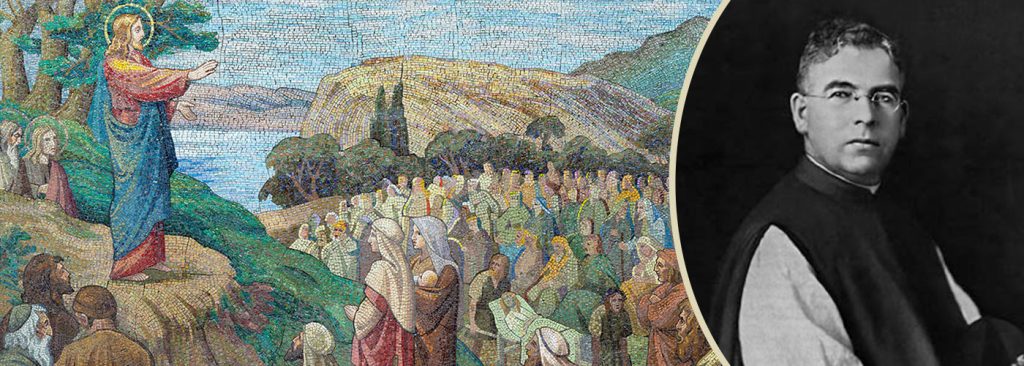
On the third Sunday of September, the Catholic Church celebrates Catechetical Sunday. This is a special occasion, not only because we begin our faith formation and catechetical programs, but also because we pray for the children and young people who will be receiving instruction and, of course, for our catechists.
We pray that they may all be enlightened by the Holy Spirit, so that they may not only learn the teachings of the Catholic faith but also live out their faith and grow in their relationship with God.
In observance of Catechetical Sunday, let us read what our beloved pastor, Father Hart, has to say about this important day.
Remember, The parish that we dream is the parish that I help to build!
God bless you, and may the Blessed Virgin Mary be with you always!
Fr. Jorge Ramirez
Holy Trinity Church… 165 years evangelizing!
Catechetical Sunday Today – Teachers of Religion Commissioned
By Fr. William M. Hart, Ph.D | September 16, 1979
Teaching the truths of our holy Faith to young people is the first work given to us by Our Lord to do. “Go and make disciples of all nations… teach them to observe all that I have commanded you.” At Mass today we recognize with prayers those who have undertaken to guide students in their ever growing realization of the wonderful Gospel truth.
What is a teacher of religion? Anyone who would become the worker with Christ in helping others toward complete conversion and dedication must cultivate in himself special qualities. For the teacher must be…
…a person of strong Faith, strong enough to make him or her see the urgency of sharing that Faith with others,
…a person of genuine humility to open the way for the Holy Spirit so that every lesson will carry God’s own credentials,
…a person of zeal to gain the knowledge necessary for effective instruction of those who come for assistance,
…a person of generosity to make the sacrifice of time required for good preparation and enthusiastic presentation of Catholic doctrine,
…finally, and most important, a person filled with the love of God, for Divine Love is the only Way by which spiritual and living truth can be communicated.
For all of our religion teachers, we thank God, and we pray for their holy work.
-
Mass Intentions
When we come to Mass, we often hear that there is a specific intention—that prayers are being offered for a particular person, usually someone who has passed away. But why do we do this?
We include intentions in the Mass to unite our personal needs with the sacrifice of Christ and to offer communal prayer for the living, the sick, and the deceased. This is an ancient tradition in the Church, dating back to the early centuries. We gather to pray for the deceased, and our prayers assist their souls, especially the souls in Purgatory, by commending them to Divine Mercy. We also pray for the living—whether they are sick, celebrating an anniversary or birthday, or simply offering thanksgiving for a blessing received. Furthermore, our prayers provide communal support, allowing the entire parish family to unite in prayer for a particular person or intention. Holy Trinity Church is no exception. We gather to pray for all these intentions whenever we celebrate the Holy Sacrifice of the Eucharist. Please be sure to familiarize yourself with our parish guidelines when requesting a Mass for your intentions.
Guidelines for Mass Intentions
A cherished part of our Catholic tradition is requesting that a Mass be offered for loved ones. The following guidelines are put forth in an effort to ensure that all requests are handled fairly and thoughtfully.
Scheduling a Mass Intention
- Contact the parish office by phone at (585) 265-1616 or stop in during office hours.
We will grant requests as close to your preferred date as possible; if unavailable, we will offer the nearest alternative date.
Booking Schedule
- The Mass Intention book opens annually in the second week of September for the entire following calendar year.
- Requests are honored on a first-come, first-served basis in the order received.
One Mass each weekend (Saturday evening or Sunday morning) and one Mass on each Holy Day of Obligation must be reserved as Pro Populo (“For the People”) as required by Canon Law.
Request Limits
- No individual or family may request more than five (5) total Mass intentions per year.
- Only one (1) of these may be scheduled for a weekend Mass (Saturday, 4:30 pm or Sunday, 8:30 am/10:30 am).
- The remaining four (4) must be scheduled for weekday Masses (Monday – Friday at 8:30 am).
- A maximum of three (3) Mass intentions per year may be requested for any one (1) living or deceased individual or family members from a particular family.
To ensure fairness, we will monitor that different individuals are not requesting multiple Masses for the same deceased person.
Mass Intentions May Be Requested For The Following:
- A deceased loved one or family members (e.g., Living and deceased members of the _______ family or families).
This will be indicated by a cross before their name when listed in the bulletin. - A living person who is sick or suffering.
This will be indicated as “The special intention of ___________.” - A living person celebrating a birthday, anniversary, or other special occasion.
This will be indicated as “The Special Intention of ______________ on the occasion of their birthday, anniversary, etc.”
What Should Be Written In The Book of Remembrance
- Intentions for The Souls in Purgatory.
- Intentions in thanksgiving to God (including our Lord Jesus Christ or the Holy Spirit)
- Intentions in thanksgiving for prayers answered through a Blessed or Saint
Any prayer intention that does not contradict Church teaching
Stipend
- A stipend of $10 per Mass intention accompanies each request.
- Know that we will accept any amount, including no donation for those who cannot afford the stipend.
- Payment must be made at the time of booking by check or cash.
Canon Law requires that all stipends be used exactly as designated.
Important Notes
- The schedule of Mass intentions is subject to change due to priest illness, diocesan obligations, or schedule adjustments. We will attempt to contact affected parties in advance, though this is not always possible.
Remember, The Parish that we dream is the parish that I help to build!
God bless you, and may the Blessed Virgin Mary be with you.
Fr. Jorge Ramirez
Holy Trinity Church… 165 Evangelizing!
-
Breaking News
My brothers and sisters, September is a month filled with important news and events for our parish family. I would like to share some of the most important updates with you.

1. Faith Formation Coordinator:
It gives me great pleasure to announce that Mrs. Michelle Gibbs, who has been serving as our Administrative Assistant, is now our Faith Formation Coordinator. You know Michelle. She has served as a catechist in our parish for several years, working with both children and youth. I am confident that she will be an excellent coordinator for our faith formation programs. Please keep Michelle, as well as all the children and youth participating in our various faith formation programs, in your prayers.
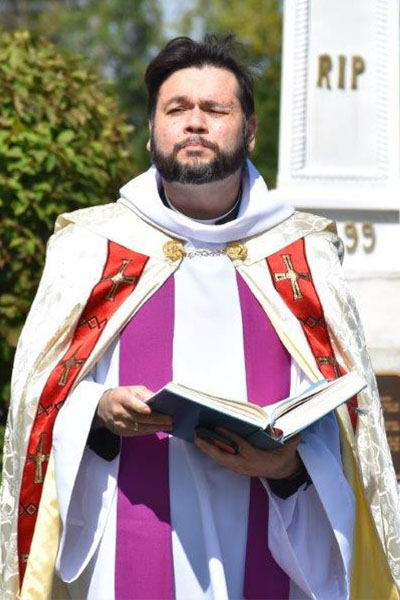
2. Blessing of Our Cemetery:
As we do every year, on September 13th, we will bless our cemetery following the 10:30 a.m. Mass, around noon. This is an opportunity for us, as a community, not only to bless the graves, but also to pray for our faithful departed and for all the souls in Purgatory. I hope you can all attend this beautiful prayer service.
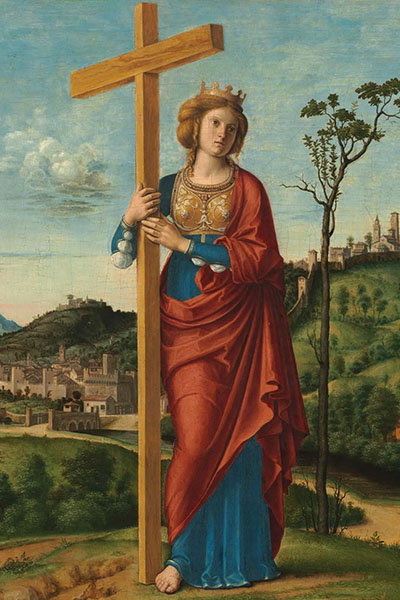
3. The Exaltation of the Holy Cross and the 1,000 Jesuses:
“Then He handed him over to them to be crucified. So they took Jesus, and carrying the cross himself he went out to what is called the Place of the Skull, in Hebrew, Golgotha. There they crucified him, and with him two others, one on either side, with Jesus in the middle” (John 19:16–18). On September 14, the Church will celebrate the Feast of the Exaltation of the Holy Cross. This year, as we did last year, we will celebrate this feast at 6:30 p.m. by praying the Colombian tradition of the 1,000 Jesuses. Please bring your rosary so that we can pray together this beautiful devotion to our Lord Jesus Christ. I hope you can join us for this special celebration and prayer.
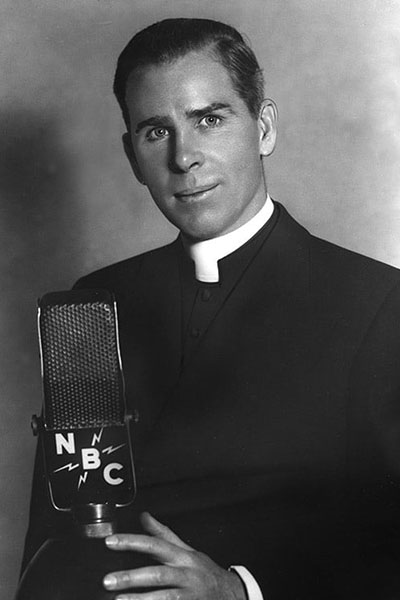
4. Relic of Bishop Fulton Sheen:
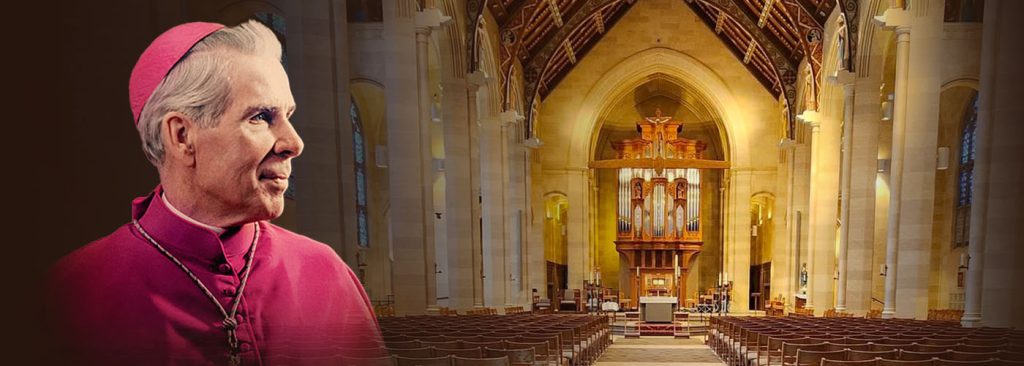
Many of us know that Bishop Fulton Sheen, who served as the sixth bishop of our diocese, is to be beatified on September 24 in St. Louis, Missouri. Many of you will remember him for his evangelization work on radio and television. Bishop Tylka will be visiting our Diocese and bringing a relic of Bishop Sheen. Bishop Bonnici will receive the relic during a special Mass on September 29, 2026, at 7:00 p.m. at Sacred Heart Cathedral. Bishop Bonnici invites all of us to participate in this Eucharistic celebration. Additionally, Bishop Sheen’s relic will visit various parishes throughout our Diocese for veneration. Below are the locations and dates of the Masses where you can go to venerate the relic:
• Sacred Heart Cathedral (Rochester): September 29th at 7:00 pm
• St. Stephen (Geneva): October 1st at 7:00 pm
• St. John the Evangelist (Spencerport): October 7th at 7:00 pm
• St. Mary (Geneseo): October 13th at 7:00 pm
• St. Joseph (Penfield): October 28th at 7:00 pm
• St. Mary Our Mother (Horseheads): October 29th at 7:00 pm
• Immaculate Conception (Ithaca): November 4th at 7:00 pm
Remember, The Parish that we dream is the parish that I help to build!
God bless you, and may the Blessed Virgin Mary be with you always.
Fr. Jorge Ramirez
Holy Trinity Church… 165 Evangelizing!
-
Let Us Love

As you know, I am not from here. Maybe you noticed this from the first day that I came to our parish. Now I wonder, how could you know that I am an international priest? Is it because of my appearance? Do I look very Latino? Or, is it because you listen to me and hear that I speak with a different accent? There is something different about me. Maybe you know what it is or maybe not, but there is something, which makes me a little bit different from you. It was a similar case when the apostles started to preach the gospel. I am very sure that Peter was not Colombian, but he had something that made him and the first Christians different from other apostles and other people who preached pagan gods. It wasn’t their appearance, or their accent, or their nationality, but something else that motivated others to adopt the Christian life and following the Risen Christ, who died on the cross for the salvation of all humanity.
The question, my brothers and sisters, is what motivated the listeners to change their lifestyles and become Christians. This was a style of living that was (and is still today) characterized by love, which is the first and most important commandment of the Lord, just as we just heard in the gospel.
Love is the main characteristic of those who follow Christ because He not only commanded that we need to love one another, but through His sacrifice on the cross He demonstrated His love for us. Let us think for a moment, how can we demonstrate that we love our neighbor? Each time that a parent spends his/her time preparing the food for the family, when a child studies with responsibility, when a young man proposes matrimony to his girlfriend, all of them are demonstrating that they are truly disciples of Christ.… Through each act of love that we do, in our daily lives we are showing that we are disciples of Christ, because as Jesus said in the Gospel, “This is how all will know that you are my disciples, if you have love for one another” (John 13:35).
Jesus taught us that Love is the summary of the Ten Commandments given by God through Moses on Mount Sinai. Really, this commandment is not new, but the way that Jesus loves us renewed all the law that God gave us in the Old Testament through Moses and the prophets. We should love God and our neighbor, and this, my sisters and brothers, is the summary of the Ten Commandments. Love is the new commandment given by Jesus. This commandment is perfect because love has no limits. St. John in his first letter, in chapter 4 verse 8 says, “God is Love.” If God is Love, love is perfect. And we transmit this love if we are truly followers of Christ. We need to be united with Him through the Eucharist. The Eucharist celebrated in the Church is the expression of Christ’s love for us. Hence, we cannot leave the Eucharist being the same people who came into the Church, because through the Eucharist we can transform our world into a “new earth,” which is described by St. John in the book of Revelations.
Let us allow the love of God to be in us so that we can go to proclaim the gospel of the Risen Lord through our words and works. This is our task, to love one another as Jesus loves us.
Remember, The Parish that we dream is the parish that I help to build!
God bless you, and may the Blessed Virgin Mary be with you always!
Fr. Jorge Ramirez
Holy Trinity Church… 165 Evangelizing!
-
No fears… Let us trust in the Lord

How many times have we heard the message of Psalm 23 which says, “Even though I walk through the valley of the shadow of death, I will fear no evil, for you are with me; your rod and your staff comfort me.” “Fear not” and “do not worry” are messages that the Lord gives us in multiple places in the gospels. It occurs in one of my favorite passages in the Bible, Matthew 6:34, where Jesus says “do not worry about tomorrow; tomorrow will take care of itself. Sufficient for a day is its own evil.” In Matthew, Chapter 6, and other places, the Lord is constantly reminding us not to worry, not to be afraid. Whether it be about the future, about others, even about death and the afterlife.
Now, I don’t know about you, but I know that this is a lot easier said than done. I know in my own life I tend to worry about a lot, particularly about what the future might bring. It is very easy to get worried or afraid about anything and everything. Some of us might be worried about what the future will bring. Others worry about when their next paycheck will come, how their kids are doing in school, sometimes even about individuals from their past. Perhaps the biggest fear is the fear of the unknown. So much of life is the unknown. We all struggle to cope with what we cannot control. So, what can we do? How do we face our fears and worries, whatever they may be?
The answer is actually quite simple: we have to trust in the Lord because He will always be there for us. Now, let me be very clear: just because something is simple, it does not mean that it is also easy. Trusting can be one of the most difficult things for a person to do. For those who have been betrayed by someone they trusted, learning to trust again can be extremely difficult. When trust is broken, it can sometimes be nearly impossible to get it back. But the great thing about the Lord is that He will never betray us. He has made a promise to us, a covenantal bond that He will always keep; a promise that He will always be with us, always love us, and always care for us.
While it is difficult to trust, those of us who find it easier to trust in the Lord can help those who struggle. How? Well, we see the answer in the Gospel. What the Lord speaks to us in the quiet of our hearts, we must proclaim from the rooftops. It is up to us to go out and proclaim the message of love that the Lord has given us. That’s why it’s so important to continue to maintain a relationship with the Lord. When the Lord speaks to us, we can proclaim those messages of love to the world.
A couple years ago, on the Feast of Corpus Christi, Bishop Matano inaugurated the Year of the Eucharist, in conjunction with the 150th anniversary of our diocese. Bishop Matano reminded us that the Eucharist is the ultimate symbol of God’s love for us, the promise that He would always be with us and remain with us. It is the Eucharist, which we celebrate every week, that is a constant reminder that the Lord is with us, and that we can always trust Him.
So, there will always be reasons to worry and fear. Life brings us hardships and difficulties. It’s almost impossible not to worry or be afraid at some points in our lives. The good news is that we have a God who we can trust to take care of us and provide for us. Even the mystery of death can be worry free. As long as we continue to bring Christ’s message to the world, we have His promise that He will acknowledge us before our Father in Heaven, and we will one day be united with Him in Paradise.
Jesus, I trust in you!
Remember, The parish that we dream is the parish that I help to build!
God bless you, and may the Blessed Virgin Mary be with you always!
Fr. Jorge Ramirez
Holy Trinity Church… 165 years evangelizing!
-
Our Lady of Las Lajas
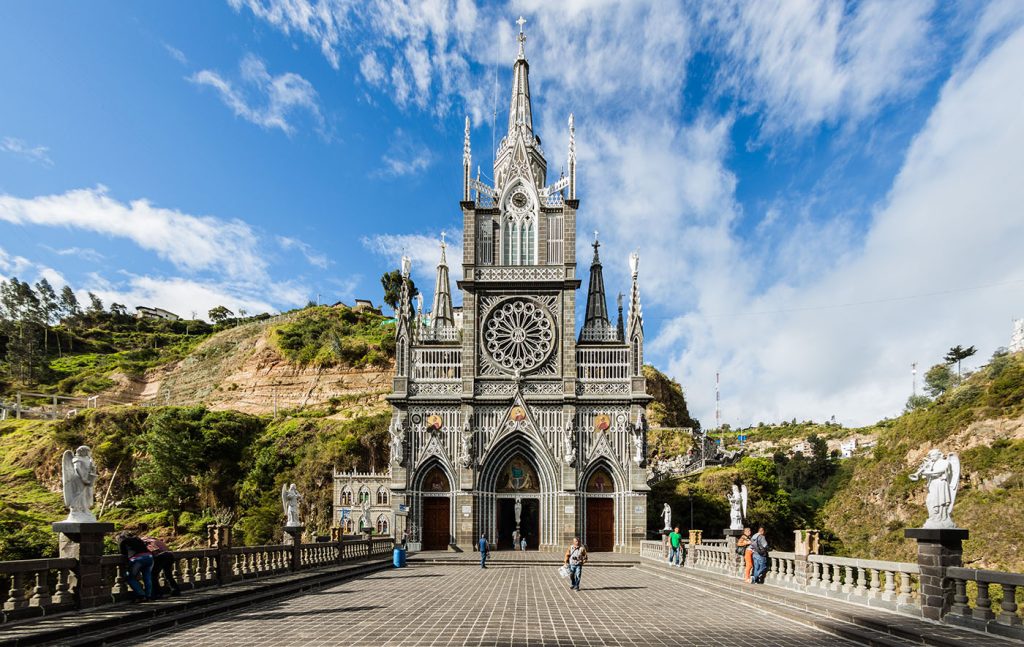
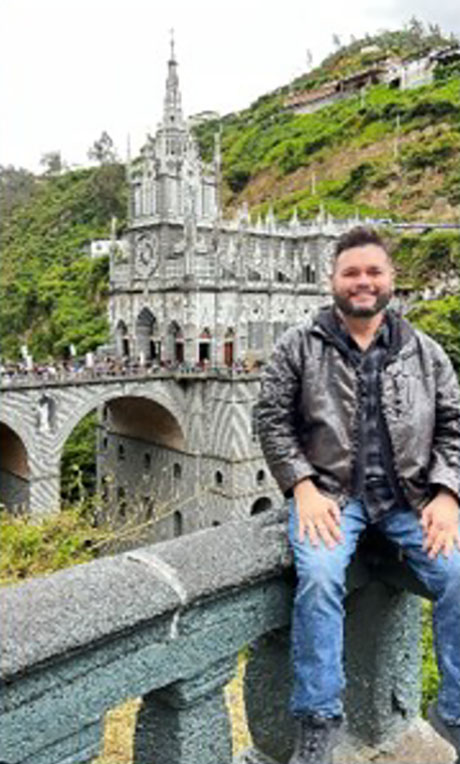
During my vacation in 2022, I visited the Shrine of Our Lady of Las Lajas. This shrine is in the town of Ipiales in the Department of Nariño, in the south of Colombia. I had the opportunity to pray in thanksgiving for my vocation and my priestly ministry in the Diocese of Rochester. Let me tell you a little bit about Our Lady of Las Lajas:
In the 18th century, Maria Mueses de Quiñones, an Indian woman from the village of Potosí, Colombia, often walked the six miles between her village and the neighboring one of Ipiales. One day in1754 as she was approaching the bridge across the river Guaitara at a place called Las Lajas (which means flat, slippery rocks), a terrible storm came up. Frightened, the poor Indian took refuge in a cave on the side of the path. Feeling a bit spooked and alone, she began to invoke Our Lady of the Rosary, who had been made popular in the region by Dominican friars. All of a sudden she felt that someone was touching her back and calling her. She turned around, but didn’t see anyone. In terror she fled to Potosí.
Days later, Maria returned once more to Ipiales, carrying her daughter Rosa, a deaf-mute, on her back in the Indian fashion. By the time she had climbed to Las Lajas, she was tired and sat on a rock to rest. The child got down from her back and started climbing around the rocks. Soon she exclaimed: “Mommy, Mommy, there is a white woman here with a boy in her arms!” Maria was shocked since this was the first time she had heard her daughter speak. She was also scared because she could not see the figures the girl was referring to. So, she grabbed the child and hastened on to Ipiales.
When she told friends and relatives what had happened, no one believed her. So, she just took care of her business and went home to Potosí. When she came by the cave Rosa yelled: “Mommy, the white woman is calling me!” Maria still couldn’t see anything and so she hurried to take her daughter far away from this apparently haunted place. Back at home she told other friends what had happened. This time, since the path by that cave was much traveled, the news of something supernatural happening there spread quickly.
A few days later, the child Rosa disappeared from her home. After looking everywhere, the anguished Maria guessed that her daughter must have gone to the cave, because the child had often said that the white lady was calling her. Maria ran to Las Lajas and was overjoyed to find her daughter kneeling in front of the white lady and playing affectionately with the child who had come down from his mother’s arms to be with Rosa. Maria fell to her knees before this beautiful spectacle; she had seen the Blessed Virgin and the Divine Infant for the first time.
Fearful of ridicule from the people who had not believed her previous accounts, Maria kept quiet about the episode. But she and Rosa frequently went to the cave to place wildflowers and candles in the cracks of the rocks.
Time passed, with Maria and Rosa keeping their secret. But one day the girl fell gravely ill and quickly died. The distraught mother decided to take her daughter’s body to the feet of the Lady of Guáitara. There she reminded the Virgin of all the flowers and candles Rosa had brought her and the poor mother asked the Lady to restore Rosa to life. The Blessed Virgin, moved by the sadness of Maria’s unrelenting supplications, granted Rosa’s miraculous resurrection. Overflowing with joy, Maria went to Ipiales. She arrived at nighttime and told everyone what had happened. Those who had already gone to bed, got up, the church bells were rung, and a great crowd gathered in front of the church to hear what had happened. At daybreak everyone went to the cave. There was no more doubt about the miracle when all could see supernatural lights streaming from the cave. Going in, they found forever engraved into the rock wall, the image of the Most Holy Virgin. Maria Mueses de Quiñones could not recall noticing it until then.

Our Lady of Las Lajas
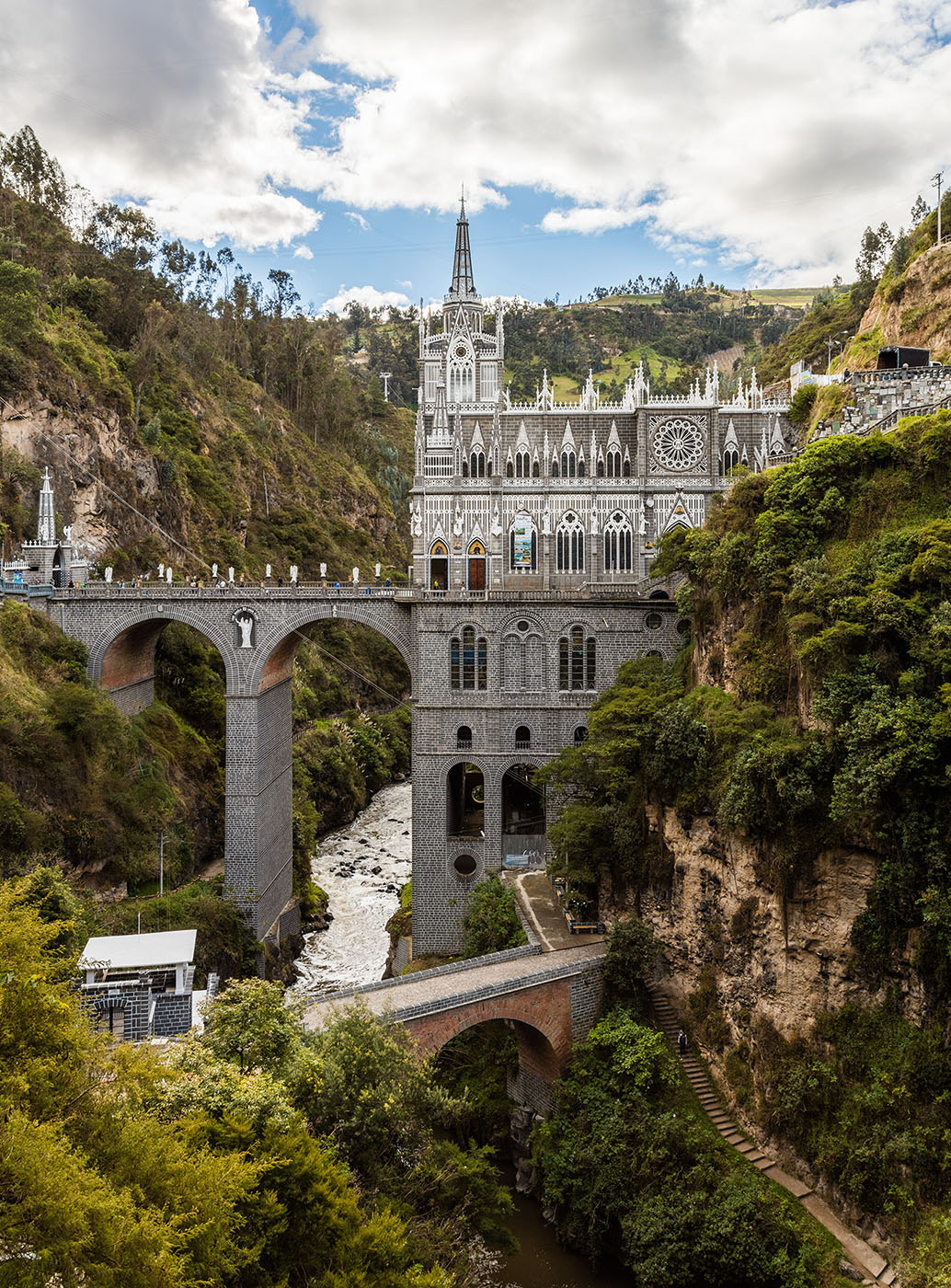
Our Lady of Las Lajas
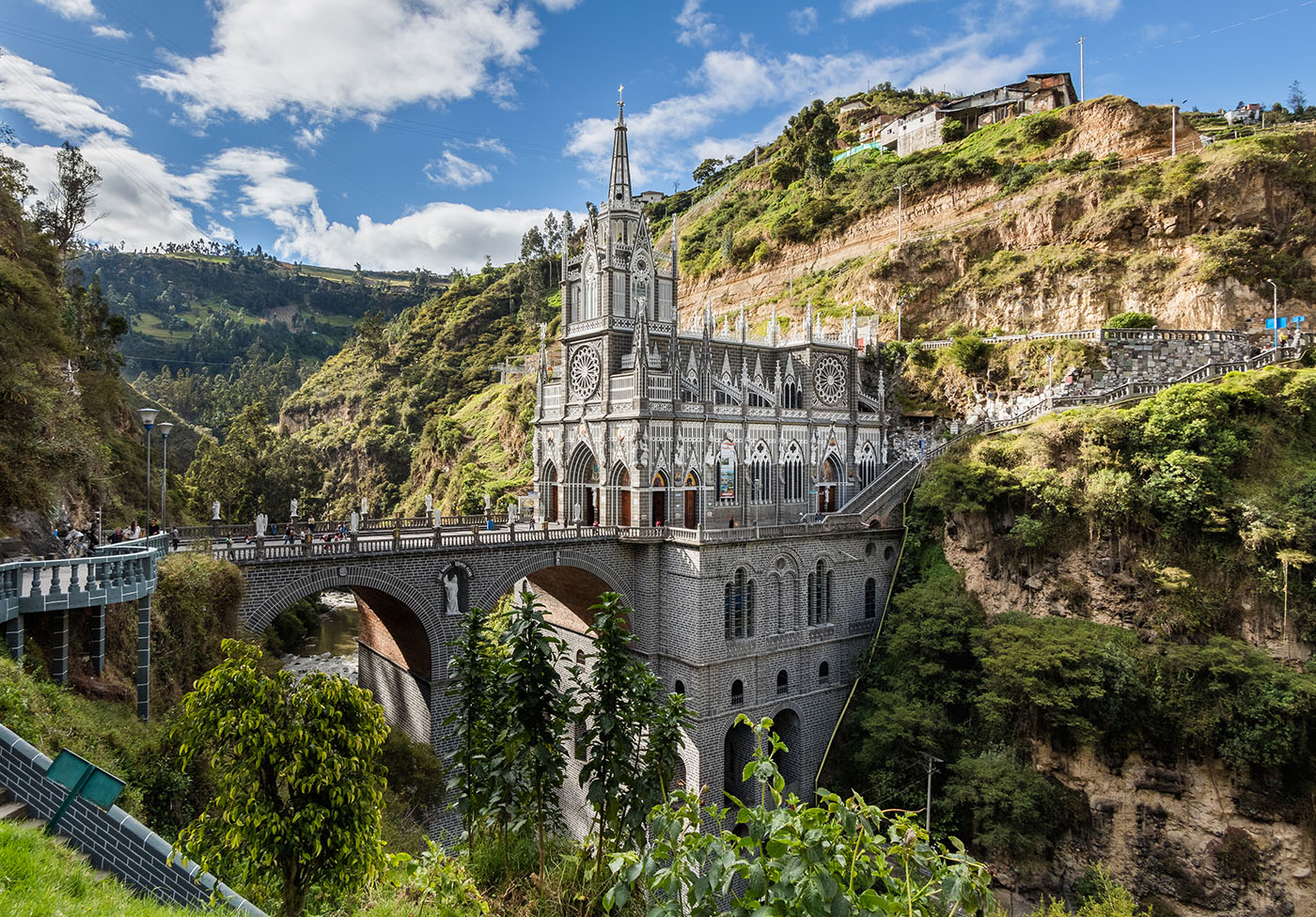
Our Lady of Las Lajas
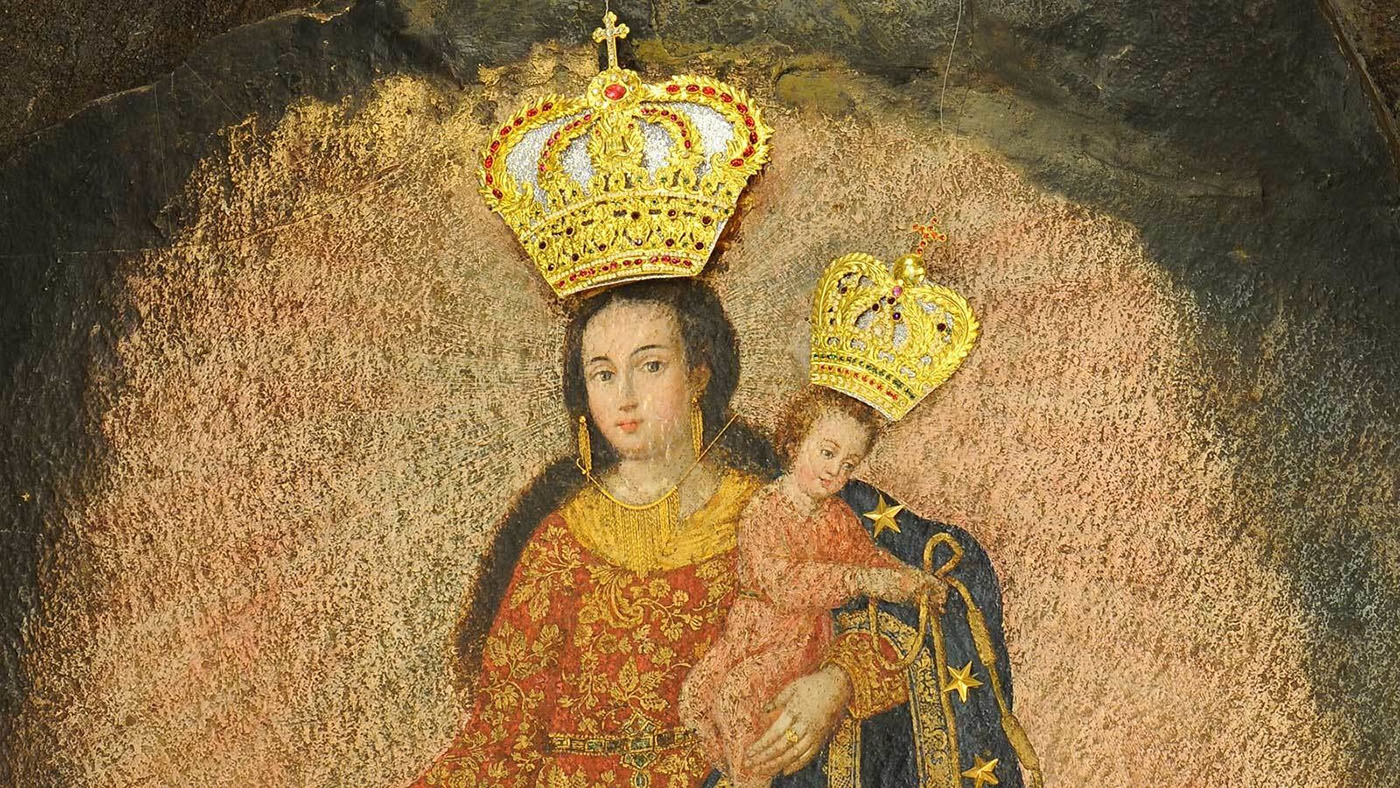
(text taken from interfaithmary.net; photos: wikipedia)
Let us pray under the intercession of Our Lady of Las Lajas. Our Lady of Las Lajas… pray for us.
Remember, The parish that we dream is the parish that I help to build!
God bless you, and may the Blessed Virgin Mary be with you always!
Fr. Jorge Ramirez
Holy Trinity Church… 165 years evangelizing!
-
The voices of our Pastors
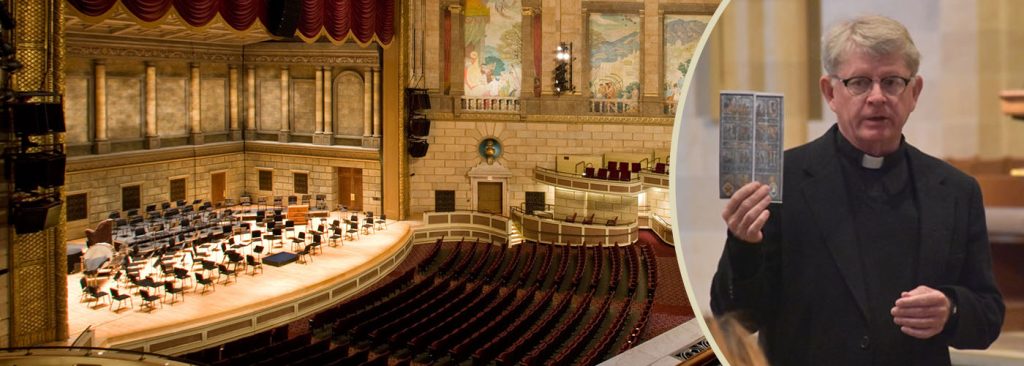
On a day like today but 2015, Fr. Tim talked to us about our spiritual life and our relationship with the Lord God. Let us read again the words of our beloved pastor.
Remember, The parish that we dream is the parish that I help to build!
God bless you, and may the Blessed Virgin Mary be with you always!
Fr. Jorge RamirezHoly Trinity Church… 165 years evangelizing!
I’m Spiritual but not Religious
By Fr. Tim Horan
August 9, 2015Have you heard someone say that to you? It seems to be a common phrase these days. Many feel it best expresses their view of life. Let’s take a minute to see what they mean by that. Let’s try to see the good thing they are pointing to because they feel it’s a thoughtful, virtuous way to live life. And it is.
“I’m spiritual”. It means a person is aware that there is “something” in this world beyond what we can see and touch. There is something that can’t be spotted by our microscopes or telescopes or chemical analysis. It’s a spirit that has a meaning and beauty that makes human life worth living. It seems very active in those “peak” moments of life . . . falling in love, the birth of a child. One gets the sense of being connected to something bigger than themselves, something kind and beautiful.
The phrase, “I’m spiritual”, is a non-technical term trying to describe a feeling or an intuition. When I am aware of it, I experience myself fitting into a universal, spiritual plan. The plan is good and benevolent, and I feel happy that I could connect with it.
That’s not bad, eh? Really. It sensitizes people to the beauty around us. It’s like a melody playing in the background. When we feel this “good spirit” we say, “I don’t go to church. My church is a walk in the woods.” I think we’ve all found the beauty of nature touching us and leading us to the Creator. We’re all “spiritual” in this sense.
So what’s the problem with this? It doesn’t hurt anybody. There have been no wars fought over being “spiritual”.
My only thought at this point is there’s no one to thank. It’s a painting without a painter; a symphony without a composer. We’re still ALONE. Ultimately what good is that?
What happens when life turns ugly? What happens when I don’t feel my spiritual side; when sorrow or sickness or tragedy strikes? When my walk in the woods is scary and lonely? When life and its demands feel overwhelming? Being “spiritual” somehow doesn’t get to the depth of the human experience.
OK, so what about “religion” and how is it different from that “spiritual” feeling? What follows are words from someone who “believes in God”.
The Christian religion says that God has actually revealed himself to us in the history of the human race. There was a 5000 year old process of recording God’s actions in human history called the Bible (the creation of the heavens and earth, calling a people to a special relationship with him (the Jews), and finally coming to live among us in human form (Jesus Christ)).
In this process we are given a pretty specific description of who God is and how God acts. Time and again Jesus would say, “the Kingdom of Heaven is like . . .” and there would follow a picture of some aspect of God, right down to his name – – “Father”. One of his stories describes heaven to a king who has a banquet and we humans are invited guests.
So, Christians can’t walk away from this Revealed Word. We are tied to this belief about God and human existence. The word “religion” itself has the notion of being “tied to” something (religare – Latin meaning “to bind together”).
“Being tied to” what has been revealed is really important because it gives us the knowledge to know who God is. The people who hold this knowledge and act according to its instructions have what we call “religion”.
But, aren’t there many religions? Yes, there are many religions. So, then it doesn’t matter which one I practice, right? It does if you want to know the truth. They all might have something of the truth, but they can’t all be right. (The Resurrection of the Dead for Christians is totally different than the Reincarnation for Bhuddists).
It’s here I think we go back to two things. True religion, unlike “being spiritual” has to deal with,
1. the staggering beauty of human life in both its joys and sorrows – – – what best explains who we are? What is love? How can there be suffering and yet still a God we can honestly worship?
2. How does one come to the knowledge and love of such a Being?
Answers to these questions are beyond our ability to fathom. God has to help us. He has to give us something that will touch the deepest recesses of the human heart and open us to His Mystery. It’s called the gift of Faith, and it was delivered to us in actual words by another human being, Jesus Christ .
“This is my beloved Son. Listen to Him.” Luke 9:35.
Blessings to you.
Fr. Tim
-
The Immaculate Heart of Mary
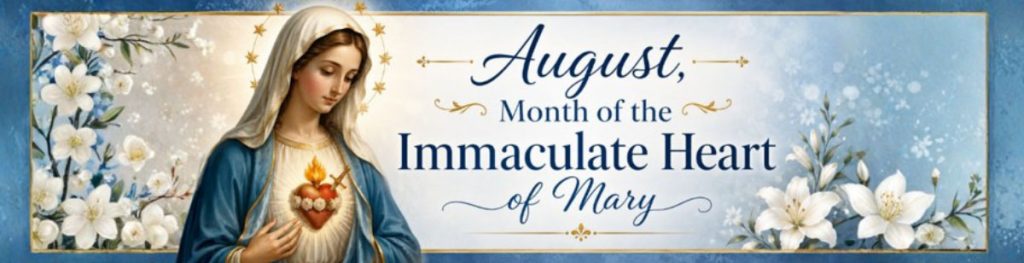
Alongside the Sacred Heart of Jesus, the Immaculate Heart of the Virgin Mary is deeply cherished by Catholics around the world. Consequently, June is dedicated to the Sacred Heart of Jesus, and August to the Immaculate Heart of Mary. This celebration is a devotion that highlights the life, virtues, and purity of the Blessed Virgin Mary. She is depicted with her heart surrounded by roses and flames; sometimes, it is pierced by a sword, symbolizing her sorrows (cf. Luke 2:35).
It is crucial to note that the Immaculate Heart of Mary is venerated, not worshipped. We worship God alone. But what does it mean to venerate? According to the dictionary, to venerate means to show profound respect, honor, or reverence toward someone or something due to their dignity, great virtues, or what they represent. Therefore, we venerate the Virgin Mary, the saints, and the angels because of their exemplary lives and their closeness to God. Let us remember that worship is the absolute adoration of God—the acknowledgment of His Divinity and total surrender—which is offered only to God.
Devotion to the Immaculate Heart of Mary gained special significance in the 20th century through the apparitions of Our Lady of Fatima. During these apparitions, the Virgin called for devotion to the First Saturdays, the praying of the Holy Rosary, and the consecration of Russia; she also indicated that her Immaculate Heart would be the refuge leading to God. Subsequently, several Popes have consecrated the world to her Immaculate Heart.
Pope Saint John Paul II stated, “From Mary, we learn to love Christ, her Son and the Son of God… From her, we learn to be ever faithful, to trust that God’s Word will be fulfilled in us, and that nothing is impossible for God” (translated from Spanish). Alongside the designation of August as the month of the Immaculate Heart of Mary, we observe other Marian celebrations that honor the Mother of the Lord during this month. On August 15, the Church celebrates the Solemnity of the Assumption of the Blessed Virgin Mary, acknowledging that she was assumed body and soul into heaven.
On August 22, the Church also commemorates the feast of Saint Mary, Queen of Heaven and Earth. Both of these celebrations are highlighted in the praying of the Glorious Mysteries of the Holy Rosary. Furthermore, the Catholic Church in Ireland celebrates the feast of Our Lady of Knock on August 21. Although August 8 marks the feast of Saint Dominic de Guzmán, founder of the Dominicans, we could say that we are still honoring Our Lady, for it was to Saint Dominic that the Blessed Virgin Mary entrusted the devotion of the Holy Rosary in 1208.
My brothers and sisters, let us venerate the Blessed Virgin Mary—not only in August but every day of the year—through our love, honor, and devotion to the Holy Rosary.
Remember, The parish that we dream is the parish that I help to build!
God bless you, and may the Blessed Virgin Mary be with you always!
Fr. Jorge Ramirez
Holy Trinity Church… 165 years evangelizing!


